
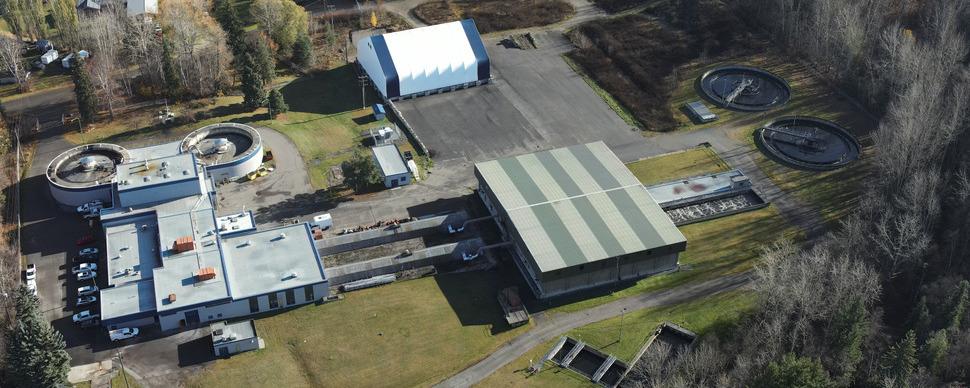
Lansdowne Wastewater Treatment Centre
The Lansdowne Wastewater Treatment Centre (WWTC) was constructed in 1967 with upgrades completed in 1973, 1978-1982, and 1996-1997. The treatment plant is a level 4 treatment system that includes both primary and secondary treatment of wastewater prior to discharge into the Fraser River. The treatment plant is designed to accept and treat wastewater flows of up to 45 million litres per day (45,000 cubic metres per day).
WWTC facts (based on 2025 operational data)
Daily Flow
- Average daily flow: 23,287 cubic metres per day
Incoming Raw Wastewater
- Average biochemical oxygen demand (BOD): 320 milligrams per litre
- Average total suspended solids (TSS): 283 milligrams per litre
Treated Wastewater
- Average biochemical oxygen demand (BOD): 27.9 milligrams per litre
- Average total suspended solids (TSS): 11.0 milligrams per litre
Image
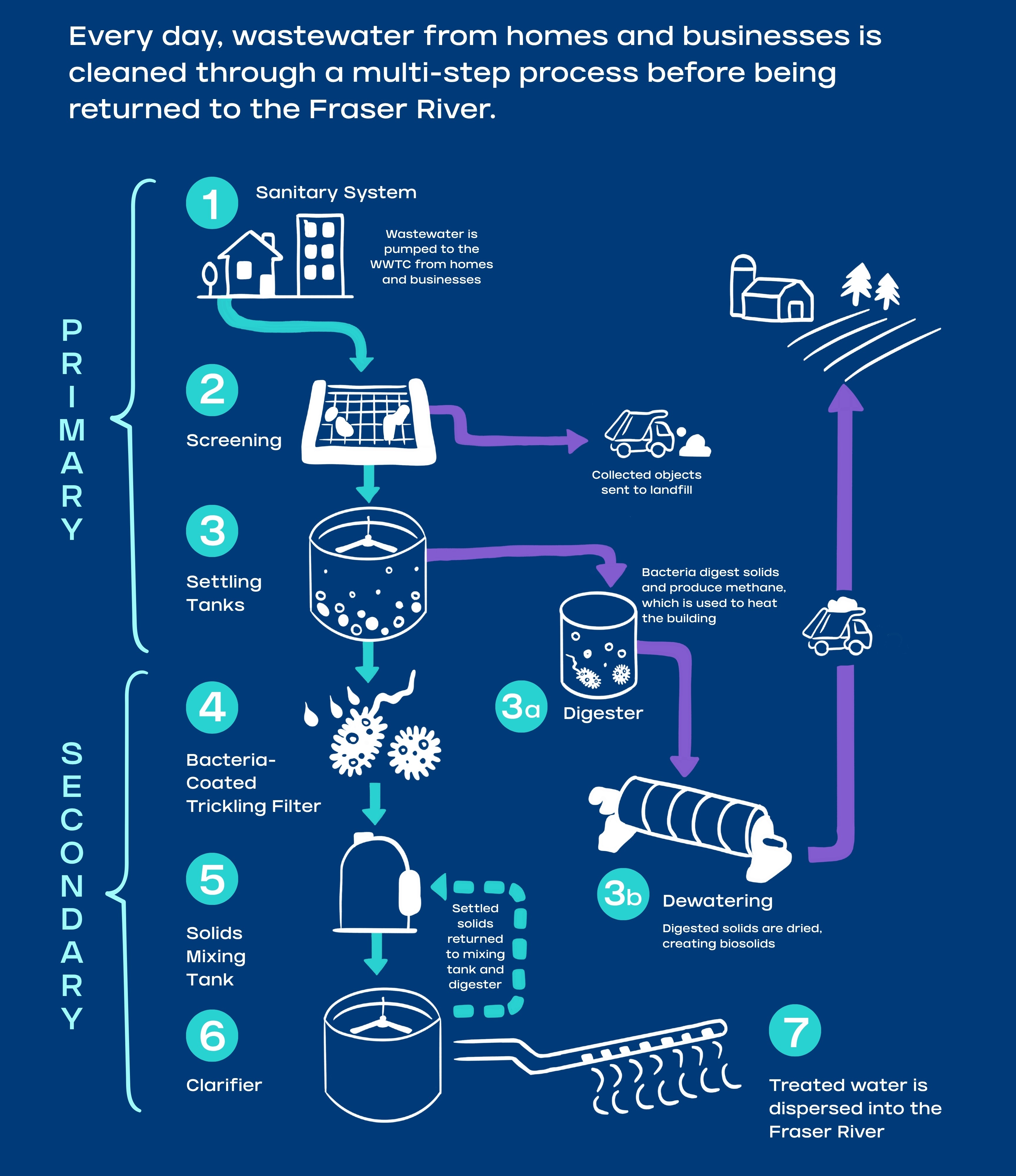
How the WWTC treats wastewater
The WWTC treats wastewater by removing suspended solids and reducing biochemical oxygen demand (BOD) in the wastewater through primary, secondary, tertiary treatment processes.